< Back to body restoration section

Parts Restoration


Although at this stage it probably would have been better to concentrate on the body of the car, the car was stored at my lockup, making it much more difficult to work on. Therefore, as I stripped parts off the car I brought them home and restored them when they could be saved.

As you can see for many of the parts that I restored it took quite a bit of work! Many of them were quite heavily pitted with rust or tarnished, and I decided to keep this and not fill and polish them to perfection as a sort of nod to the state that the car was originally in.


Front Indicators
Well I had to start somewhere, so it might as well be the front indicators! As they came off the car and I knew they were an expensive item if I had to replace them, so I thought I'd see if they could be saved. Three of the four mounting studs had to be replaced which was a difficult job as they were originally cast in. I ended up drilling them out, and tapping the aluminium and then bonding some stainless stud bar in. It seemed to work ok.

The next step was to remake the light terminals that were missing. Being the American version these had two terminals not one, so I ended up cannibalising a beetle 'snowflake' tail light bulb holder to make what you see below (left-side picture). I’m quite pleased as it's not far of the original (see the right indicator in the right-side picture).

And here is the finished indicators. I only had one lense (an original glass one) and one mounting ring, so I had to buy a second plastic reproduction lense and mounting ring. I will keep trying to find an original glass lense. The bodies were polished up and they came out ok.


Number Plate Light
The number plate light was missing from the car when I brought it (like most parts!) but something in my head said I wanted to get this bit. It was purchased from eBay (with added Ghia tax!) and this lime green monstrosity turned up.

It was quite bent out of shape where people had been grabbing the wrong bits to open the engine lid (I'm guessing this is common) so the first thing I did was straighten this.

Next on the to do list was to clean up the bulb holder assemblies and get all the overspray of the wiring. I remade the reflectors out of aluminium which were then polished up. It was as close as I could get to the original chrome finish.

And finally, all that was left to do was to bare metal (well aluminium!) the body of the housing, which was actually a lot more difficult than it sounds involving multiple applications of paint stripper, and a clean and strip wheel. It was etch primed, then primed, but has not been painted yet as I’m not sure what colour I’m going with the car yet (If any!).


Wiper Motor
The original wiper motor was all there, but I will be upgrading to 12v, so I decided to do a conversion that I had done with the Ragtop, which was to fit a later 2 speed wiper. However, before I could do that, I needed to clean the frame and all the components up.


However, the conversion was not as straight forward as I had thought. The arm that was on the Ghia wiper motor was longer than a beetle one, and the post on the beetle was a larger (See the first picture for comparison). I therefore had to make a new one. I don’t have a lathe so the new post was made using a drill, a grinder, and files, with lots of measuring. I think for such a Heath Robinson set up it turned out ok. It will be welded to the later beetle wiper motor later on as I haven’t quite got around to it yet.


To make the two-speed function work I was going to need a switch that had two speeds (The Ghia originally only had a one speed wiper). I also wanted the squirters to work off this, but to make it that bit more difficult I had decided to convert to an electric washer pump. Therefore, I adapted a later wiper switch. This allowed me to keep the look of an early switch, but with full up to date functionality.


And here's a short video of it all working.


I finally got around to welding on the new arm I made to convert a bug wiper motor to a Ghia frame. So that it was in the right place, I first marked the position of the original arm, and measured the height it sat before I cut of the old one and welded on the new. Not my neatest welding but it will do.


And finally, after putting off re-assembling the wiper motor for ages (no idea why!!) I finally did it!! It took me about 5 minutes!!


Pedals
I had rebuilt a few sets of pedals before, but I had never done a LHD set. They actually seem less complicated than a RHD set up. Anyway, this is what I started with. Very rusty, but saveable.

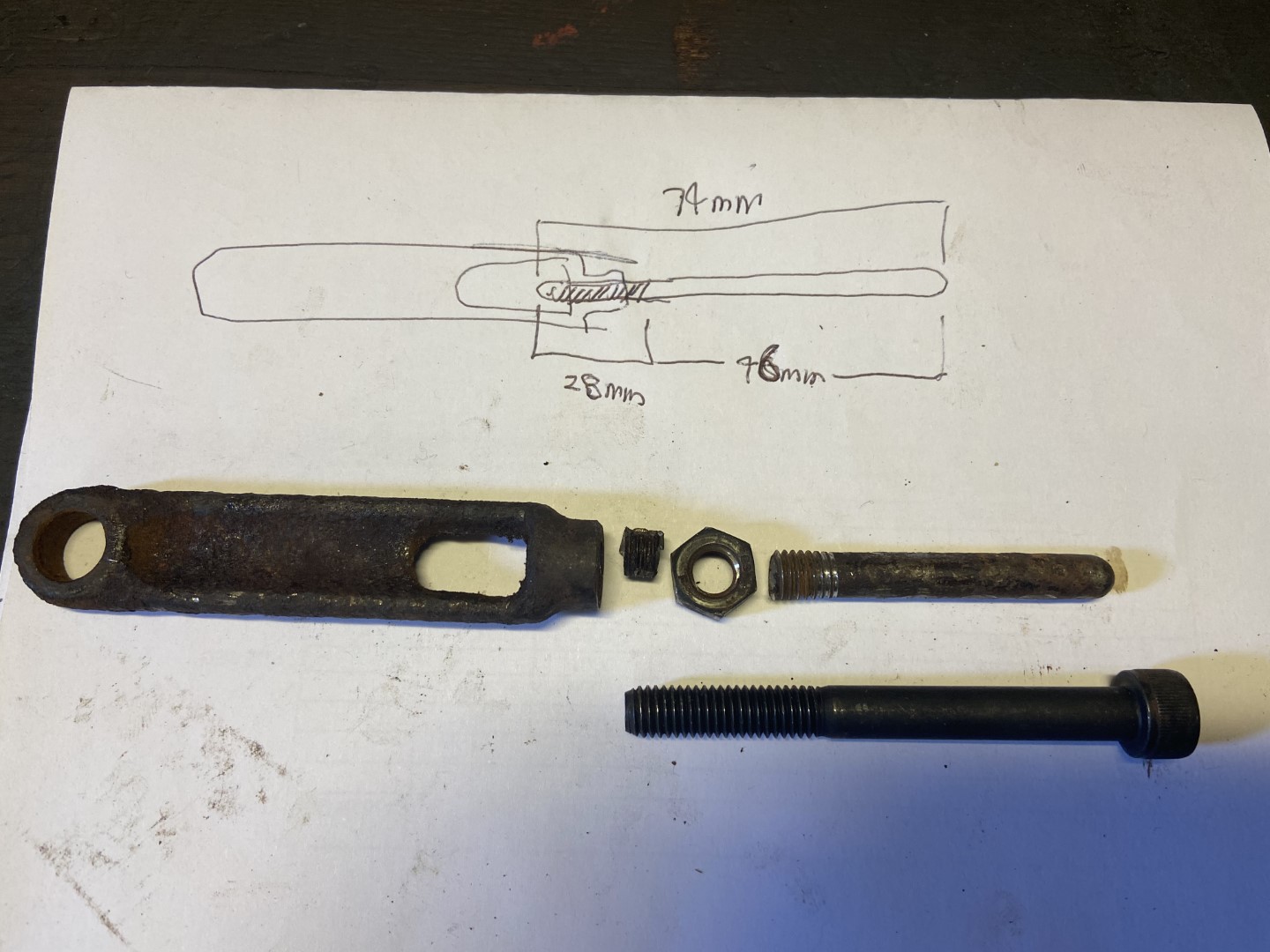
The pedals mostly came apart ok with a little bit of persuasion, but the brake push rod bit did shear off. This gave me the opportunity to reproduce it in stainless. Again, using my trusty drill, grinder and files set up, with a bit of polishing afterwards, I made a new brake push rod. Turned out quite nice.


Next up to get cleaned up was the main body and shaft of the pedals. The body of this is made from aluminium so a lot of sanding and polishing sorted this out.

I also remade some of the pins and other parts in stainless just because I could! The middle one is the pin in stainless, the left one is the original pin, and the right one is the bolt I made it from!

And here's all the parts for the pedals cleaned up, painted, or remade. Just need to put them all back together again now!

As with putting the wiper motor back together I had been putting off re-assembling the pedals for ages too due to fears about it being a pain to do. Once I got on with it it actually went pretty straight forward.


Horn
These are the original horns, and as you can see, they were in a sorry state! Not surprisingly they didn’t work!! I took one of them apart, cleaned it all up, painted the body, and rebuilt it. Annoyingly it still doesn’t work!! Oh well, I’ll come back to these.....


Gear Stick and Handrake
Both the gearstick and handbrake were a pretty straight forward restoration. I bare metaled them both and repainted and replaced what needs replacing.

I’m not sure if I am going to use the original gearstick as I have a genuine vintage DeanoDynoSoars Safe T shifter (see picture) that I might use. However, I thought I would restore it anyway. It generally turned out OK, although the paint on the housing that mounts to the tunnel reacted the first times, so I had to redo this. Turned out OK the second time.


One little detail I did do was to paint the numbers black on the new gear knob. It's a little touch, but I think it makes a difference!!

Next up was the handbrake. Not much to say about this as it was pretty straight forward.


Bonnet Fittings
So finally, on to a body panel! I'm still not exactly sure what I’m doing body wise with the car. One thought is fully detailed inside and chassis but leave the body externally as it is. Another thought is fully paint and detailed. Really not sure which way I want to go. At the moment I'm going to repair anything that needs repairing, like this small hole, and match the rust back in. I’m not going to call it ‘patina’, it's way past that!!

Even though the car is as rough as hell on the outside it’s still going to get full stainless fittings throughout. Here is the bonnet on its hinges with stainless bolts and washers. The washers were actually too wide to sit flat (see the left picture), so I ground them down, again using a drill and grinder, with a polish after.

And here's the lower bonnet catch. As you can see it was in a bad state!! It actually cleaned up ok, and other than repairing the cable guide tube bit it was solid enough. It is quite heavily pitted, but I sort of like that, it tells the story of the car.


Not surprisingly the upper bonnet catch pin was also rusty!! Below on the left is the original restored pin, and on the right is a new one. I'm not going to use the new one as poor quality being quite different from the original, but I had to buy the whole thing just to get a new spring!


Engine Lid Fittings
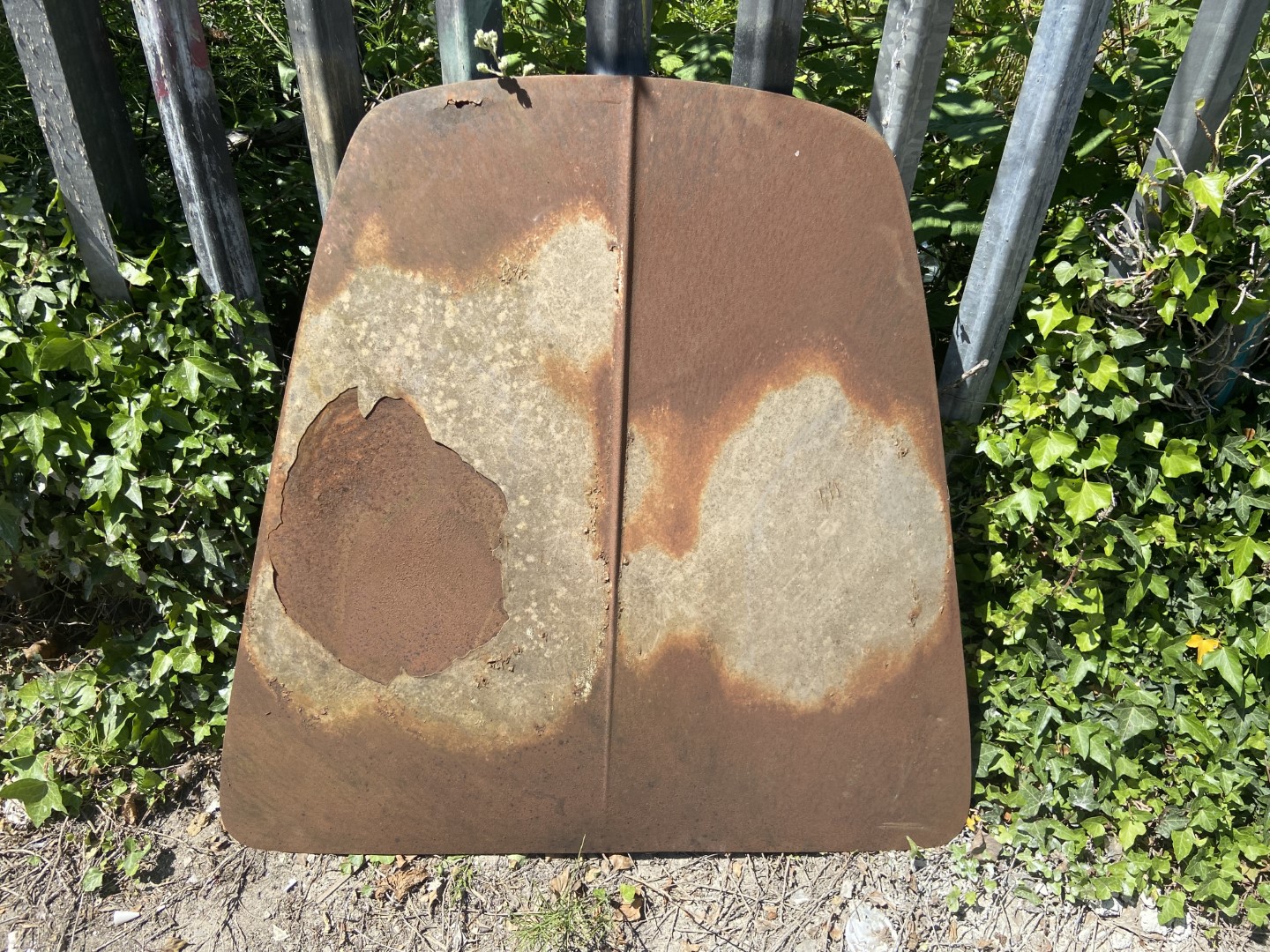
The engine lid is in the same state as the bonnet, i.e., heavily rusted, but luckily there is no holes in it. So far, I’ve left it alone.

The hinges however got the same treatment as the bonnet with stainless steel fittings being used.

I was unable to get the original bolts out of the lower hinge mounts without damaging the mounting plate on the firewall (see below left). This was annoying as it was a complicated sliding arrangement, one that I could not easily fabricate. Therefore, as they could not be seen, I came up with a bracket set up that should do the job nicely.

AAs with the bonnet, the engine lid upper catch pin was rusty as hell! I restored the pin but again I had to buy another complete upper catch kit to get the spring!! Yes, I know the paint has reacted a bit on the cup, it’s going to scratch as soon as its used, so I'm going to let it slide!!

Sadly, the lower engine lid catch was too far gone. However, it’s not actually too bad, as later catches are available with the only difference being one of the mounting holes is in a slightly different place. I will be replacing the rear scuttle where this mounts too and as you can only get later panels this won’t be an issue for the catch.

Jump to next parts restoration section >